
Age-related muscle loss—known as sarcopenia—is emerging as one of the world’s fastest-growing public health challenges. It affects mobility, balance, and overall vitality, and is often accelerated by chronic inflammation, illness, or metabolic disorders. As more adults experience fatigue, weakness, and loss of muscle tone with age, researchers have been searching for nutritional strategies that go beyond protein and exercise.
A recent study published in Redox Biology offers encouraging evidence that one specific form of vitamin E—gamma-tocotrienol—may play a decisive role in slowing this process. The research, conducted by scientists at Taipei Medical University, compared the effects of gamma-tocotrienol to conventional alpha-tocopherol, the standard vitamin E found in most supplements. Results suggest that gamma-tocotrienol provides stronger protection against inflammation-induced muscle atrophy and could serve as a next-generation ingredient for muscle and healthy-aging support.
What the Study Found
To test how these vitamin E forms affect muscle health, the researchers used both C2C12 muscle cell cultures and an LPS-induced muscle atrophy mouse model, which mimics the inflammatory stress seen in chronic disease and aging. Across both experiments, gamma-tocotrienol outperformed alpha-tocopherol. Key findings included:
- Down-regulation of atrophy genes. Gamma-tocotrienol suppressed MuRF-1 and Atrogin-1—two major biomarkers that trigger protein breakdown in muscle tissue.
- Lower oxidative stress. It inhibited inflammatory pathways such as NF-κB and Foxo3a while reducing mitochondrial reactive oxygen species (ROS).
- Improved mitochondrial function. Supplemented subjects showed higher levels of Sirt1 and Pgc-1α—enzymes essential for mitochondrial biogenesis and energy metabolism.
- Greater muscle strength and size. In animal models, gamma-tocotrienol preserved muscle fiber thickness and enhanced grip strength, clear indicators of functional improvement.
While both vitamin E forms offered some benefit, the tocotrienol variant consistently delivered stronger and broader effects. Serum measurements confirmed reduced IL-6, a key marker of systemic inflammation, alongside better muscular performance.
Why Gamma-Tocotrienol Deserves More Attention
For decades, alpha-tocopherol has been recognized as the standard form of vitamin E for antioxidant protection. Yet growing research suggests that tocotrienols—particularly the gamma-isoform—may reach deeper into cell membranes and work through more diverse biological pathways.
Their unsaturated side chains allow faster mobility within phospholipid layers, improving the molecule’s ability to intercept free radicals and stabilize cellular environments. Beyond antioxidant activity, gamma-tocotrienol appears to influence gene expression, inflammation signaling, and mitochondrial health—three cornerstones of how muscles respond to stress and aging.
Broader Implications for Aging
Loss of muscle mass is not just a cosmetic concern—it’s tied to higher risk of falls, metabolic decline, and reduced independence later in life. Even mild chronic inflammation can accelerate this process by over-activating protein degradation pathways in muscle tissue.
By addressing both oxidative stress and inflammation, gamma-tocotrienol offers a dual-action approach. The results from the study add to an expanding body of evidence showing that tocotrienols may support:
- Healthy muscle recovery after exercise or illness.
- Improved mitochondrial efficiency, translating to better endurance.
- Protection against chronic inflammation that erodes muscle and connective tissue over time.
The findings position gamma-tocotrienol as a nutrient of interest not only for older adults but also for athletes, rehabilitation programs, and anyone managing long-term inflammatory conditions.
Taking the Next Step—Safely
If you’re interested in protecting long-term muscle health or exploring nutraceutical support for aging and recovery, it’s essential to start the right way:
- Consult your healthcare provider. Discuss your current medications and health history before beginning any new supplement, especially if you take anticoagulants or have chronic conditions.
- Choose natural vitamin E. Many commercial products contain synthetic dl-alpha-tocopherol, which lacks the full range of natural compounds. Look for supplements that specify d-alpha-tocopherol and include mixed tocotrienols for complete, bioavailable protection.
- Prioritize quality and purity. Transparent sourcing and standardized concentrations ensure your supplement matches the research.
Support Stronger, Healthier Aging with Natural Vitamin E
The findings from Redox Biology underscore what A.C. Grace has championed for decades: the form of vitamin E matters. Gamma-tocotrienol provides advanced cellular protection that complements a balanced lifestyle, regular movement, and nutrient-rich nutrition. After you’ve talked with your doctor, consider supplementing with A.C. Grace’s all-natural vitamin E—crafted for purity, standardized for consistency, and designed to support as you age.
Related posts



Recommended Products
-
 UNIQUE E® Mixed Tocopherols Concentrate - 120 Softgels
$44.62 - or subscribe and save up to 5%
UNIQUE E® Mixed Tocopherols Concentrate - 120 Softgels
$44.62 - or subscribe and save up to 5%
-
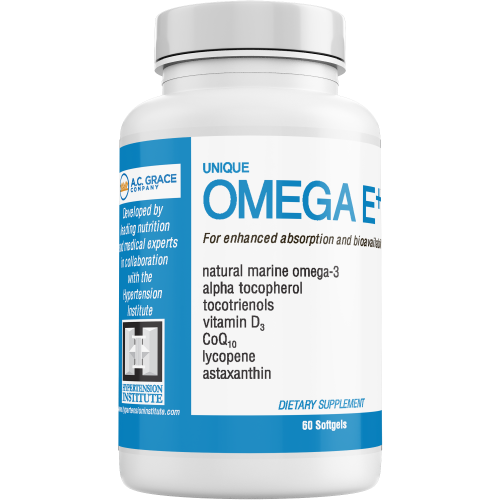
UNIQUE OMEGA E+® Omega 3 With Vitamin E – 60 Softgels
$25.99 - or subscribe and save up to 5%
-
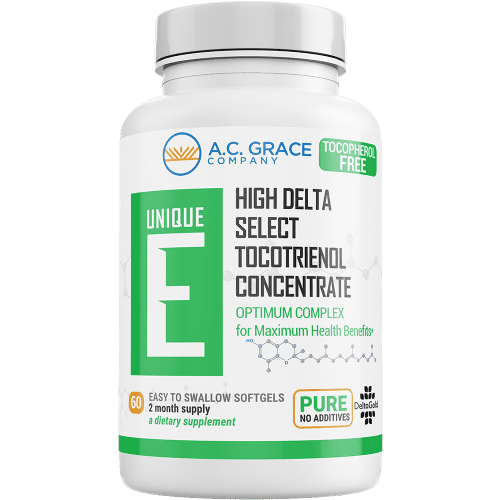
UNIQUE E® Tocotrienols – Tocopherol FREE – 60 Softgels
$42.99 - or subscribe and save up to 5%
-
UNIQUE Vitamin C 1000 mg - 100 Tablets
$20.63 - or subscribe and save up to 5%
-
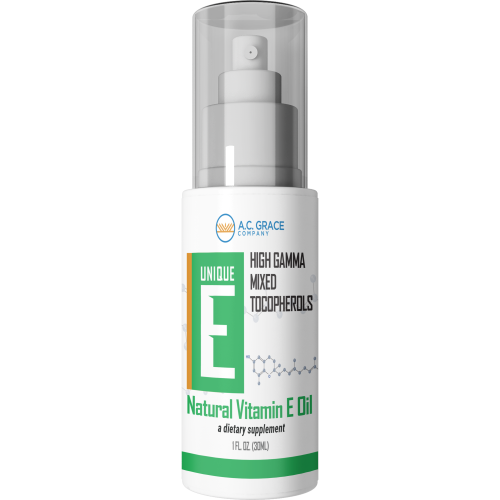
UNIQUE E® Mixed Tocopherols Concentrate Vitamin E Oil – 1 Ounce Pump Bottle
$22.27 - or subscribe and save up to 5%