
If you train hard, you already know the drill: you hit a great workout and feel sore the next day, maybe two. Some soreness is part of the process, but excessive muscle damage can bog down performance and consistency. That’s where precise nutrient dosage—not just the supplement itself—starts to truly change performance and health outcomes. Recent evidence suggests that moderate vitamin E intake can help reduce immediate markers of muscle damage after strenuous exercise, especially in trained individuals. Here’s what athletes need to know:
Main finding: Dose matters with Vitamin E
A recent meta-analysis pooling randomized, controlled trials found that vitamin E at low-to-moderate doses (≤500 IU/day) is associated with lower post-exercise creatine kinase (CK) and lactate dehydrogenase (LDH)—two go-to blood markers of muscle damage—and lower acute lipid peroxidation (a sign of oxidative stress on cell membranes). The effect shows up right after tough sessions, which is exactly when athletes care most about limiting unnecessary tissue damage without disrupting training adaptations.
Put simply, dose matters. Reasonable vitamin E intake can take the edge off immediate biochemical stress from a workout.
Why “moderate” Vitamin E intake can work better than “more”
It’s tempting to think more antioxidants are always better. But your body’s response to exercise is a balancing act. Training creates a burst of reactive oxygen species (ROS). Some of that oxidative stress is simply damage to be contained. Some of it is useful signaling that helps your muscles adapt and get stronger. The moderation message is about supporting protection without steamrolling the signals that drive fitness gains.
A 2025 update/context in European Journal of Medical Research provides a meta-analysis that lines up with that logic: ≤500 IU/day appears to be the sweet spot in these trials for lowering acute damage markers, whereas higher intakes don’t reliably add benefits. That gives coaches and athletes a practical target rather than a vague “take vitamin E” suggestion. So, what does this all mean for an athlete?
- Timing is important. The clearest benefits appear immediately after exercise and in the early recovery window. If you’re periodizing your nutrition, vitamin E belongs in the high-stress days bucket—big intensity, high volume, competitions, or testing weeks.
- Pair with food-first habits. You can raise your α-tocopherol status with vitamin-E–rich foods (almonds, sunflower seeds, avocado, olive oil). Food and a moderate supplement can be a smart way to meet the moment on tough days.
- Consider a stack on peak days. Separate evidence supports vitamin E and vitamin C together for tighter redox control (lower MDA, higher TAC/GPx). That doesn’t replace the dosage guidance here; it complements it during peak training blocks.
Simple ways to improve your Vitamin E intake
These quick guidelines can help you keep vitamin E intake practical, moderate, and tied to your hardest training days. Start small and track how you feel for a few weeks. If necessary, adjust with your coach or doctor. Follow these simple steps:
- Try for moderate intake. If you use a supplement, look for a product that helps you land at or below ~500 IU/day on heavy days. If your diet already delivers plenty of vitamin E, you may need little or none. Use bloodwork and professional medical guidance to personalize.
- Use it strategically, not constantly. Slot vitamin E into hard training days and competition windows, not every single day of the year. This matches where the evidence is strongest.
- Follow a “food + formula” approach. Keep vitamin-E–rich foods in rotation. A consistent background intake from whole foods, plus targeted supplemental support around the most punishing sessions, is both practical and athlete-friendly.
- Mind the rest of your stack. If you add vitamin C on peak days, keep the overall approach moderate. You want protection from excessive oxidative damage, not an all-out suppression of useful signals.
Talk to your doctor before you supplement
A moderate vitamin E dose (≤500 IU/day) is linked with lower immediate muscle-damage signals after hard sessions. If you want to try this approach, keep doses reasonable, use it on your toughest days, and prioritize food first (nuts, seeds, healthy oils). And, of course, talk to your doctor first, especially if you take medications or have any medical conditions.
Disclaimer: This content is educational and not medical advice. Athletes with conditions, medications, or specific lab findings should work with a healthcare professional to individualize dosage and timing.
Related posts


Recommended Products
-
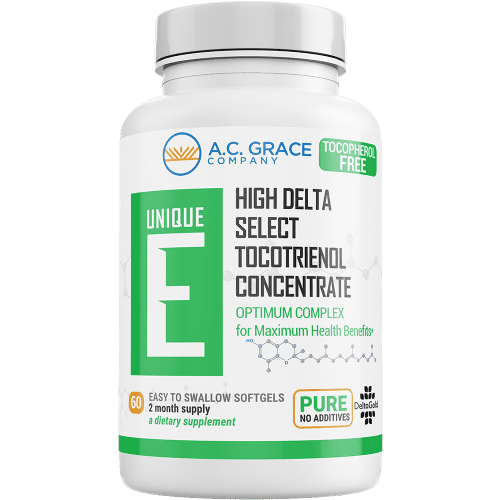
 UNIQUE E® Mixed Tocopherols Concentrate - 120 Softgels
$44.62 - or subscribe and save up to 5%
UNIQUE E® Mixed Tocopherols Concentrate - 120 Softgels
$44.62 - or subscribe and save up to 5%
-
UNIQUE E® Tocotrienols – Tocopherol FREE – 60 Softgels
$42.99 - or subscribe and save up to 5%
-
UNIQUE Vitamin K2™ Supplement - MK-7 50mgc
$29.08 - or subscribe and save up to 5%
-
UNIQUE Vitamin D3™ – 5000 IU 125 mcg
$17.37 - or subscribe and save up to 5%
-
IronUp® Liquid Iron Supplement
$34.75 - or subscribe and save up to 5%