
Vitamin E is a lesser-known vitamin compared to A, B, C or D, but it’s an essential nutrient nonetheless. Your body needs Vitamin E to survive—it’s a free radical fighter that prevents oxidative stress from harming cells throughout the body.
-
Even though there’s no doubt that Vitamin E is important to a person’s overall health, many people don’t receive their recommended daily intake of this nutrient. Read on to get to know more about recommended daily doses—as well as safe amounts and upper tolerances—for Vitamin E.
-
Natural Vitamin E supplements outperform synthetic forms, according to a VERIS Research Summary. Results of recent studies suggest that natural Vitamin E is more bioavailable and is retained in body tissues significantly longer than synthetic Vitamin E. These studies show that previously accepted differences were underestimated and that the bioavailability of natural Vitamin E is about twice that of synthetic Vitamin E compounds.
-
Wondering if you’re getting enough vitamins and minerals in your diet each day? When it comes to Vitamin E in particular, the answer is likely, no. Most people don’t get enough Vitamin E from diet alone, but rarely do they reach the level of deficiency. For those who do experience Vitamin E deficiency, the consequences can have an impact on your everyday life.


Recent Articles
Article Categories
Products
-
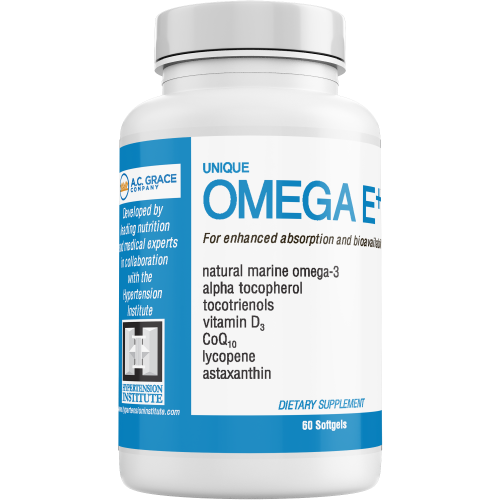
UNIQUE OMEGA E+® Omega 3 With Vitamin E – 60 Softgels
$25.99 - or subscribe and save up to 15%
-
Unique E® GG Gold - Geranylgeraniol Supplement - 60 Softgels
$32.99 - or subscribe and save up to 15%
-
UNIQUE E® Mixed Tocopherols Concentrate - 120 Softgels
$44.62 - or subscribe and save up to 15%
-
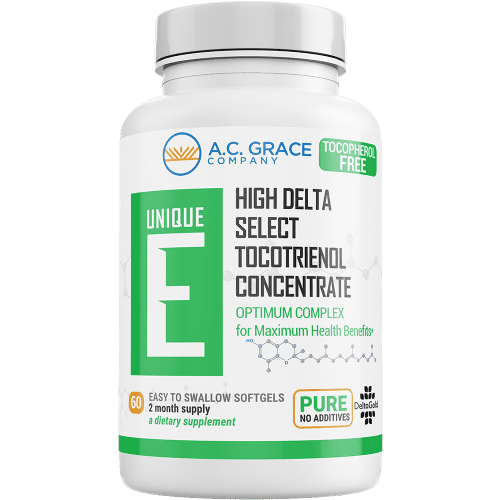
UNIQUE E® Tocotrienols – Tocopherol FREE – 60 Softgels
$42.99 - or subscribe and save up to 15%